
THE SUN
Gravity does the work
ITER says the Sun's core reaches 15 million °C, hot enough for colliding hydrogen nuclei to overcome their repulsion and fuse into helium.
Compare the fuel
WHAT THE SCIENCE SAYS
HYDROGEN IN helium and energy out
AI-generated image, not a photograph of a real person or place.
Every bit of sunlight starts as fusion.
In the Sun's core, hydrogen nuclei collide and fuse into helium, releasing energy. Scientists have spent decades trying to do the same on Earth, with magnets and with lasers. Here is how it works and how far it has got.
THE SHORT ANSWER
Fusion joins light atoms into heavier ones.
Stars do it with gravity; labs use magnets or lasers.
THE SUN
ITER says the Sun's core reaches 15 million °C, hot enough for colliding hydrogen nuclei to overcome their repulsion and fuse into helium.
Compare the fuelMAGNETS
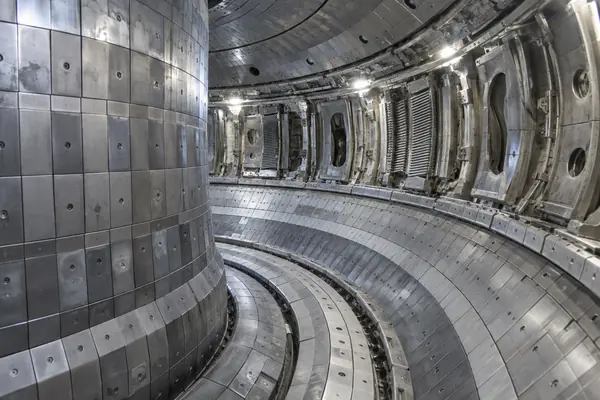
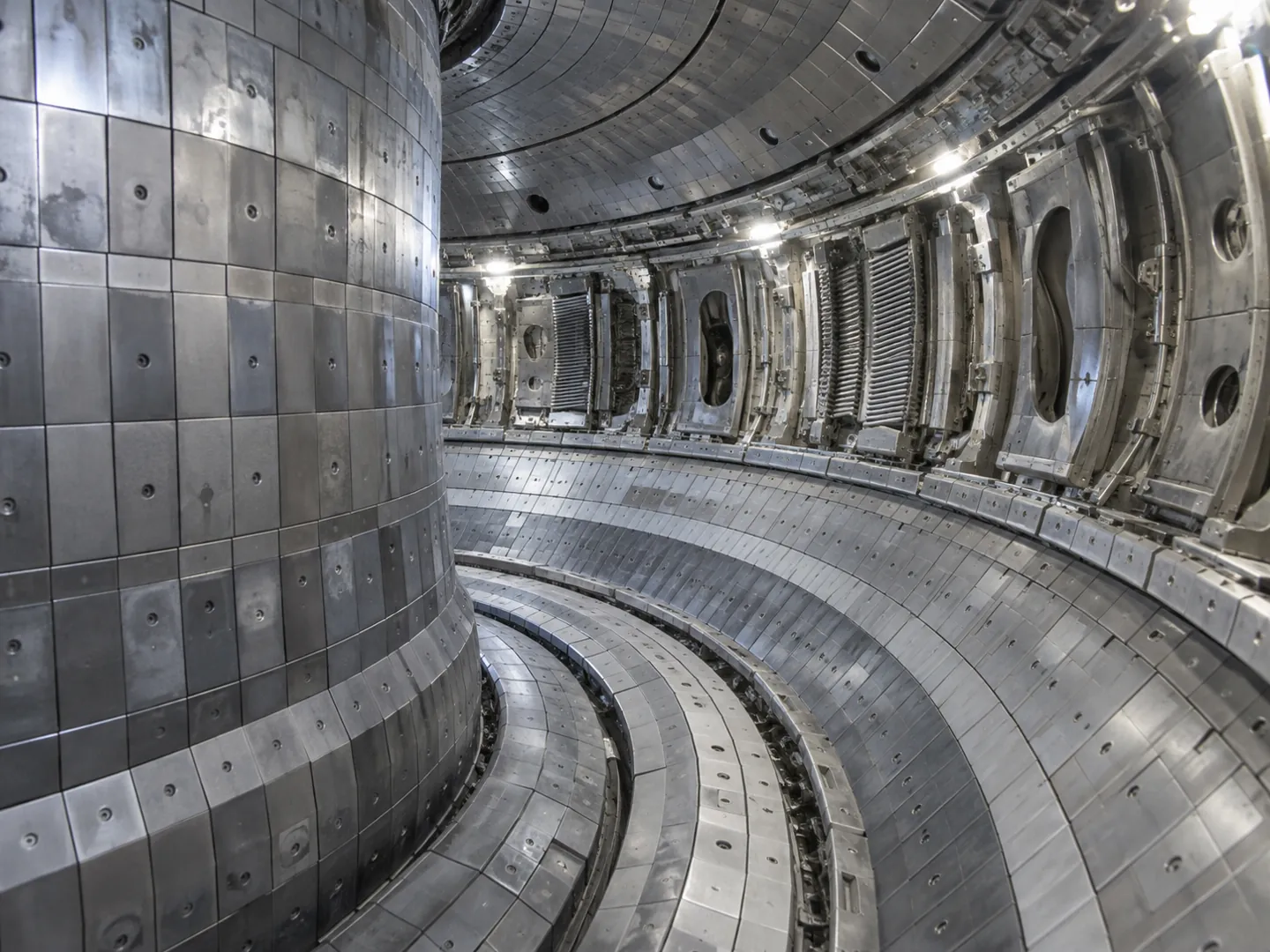
A tokamak holds a plasma in a doughnut-shaped chamber with powerful magnetic fields, keeping it away from the walls while it is heated to fusion temperatures.
See the recordLASERS
In December 2022 the US National Ignition Facility got 3.15 MJ of fusion energy from 2.05 MJ of laser energy delivered to its fuel target.
What it means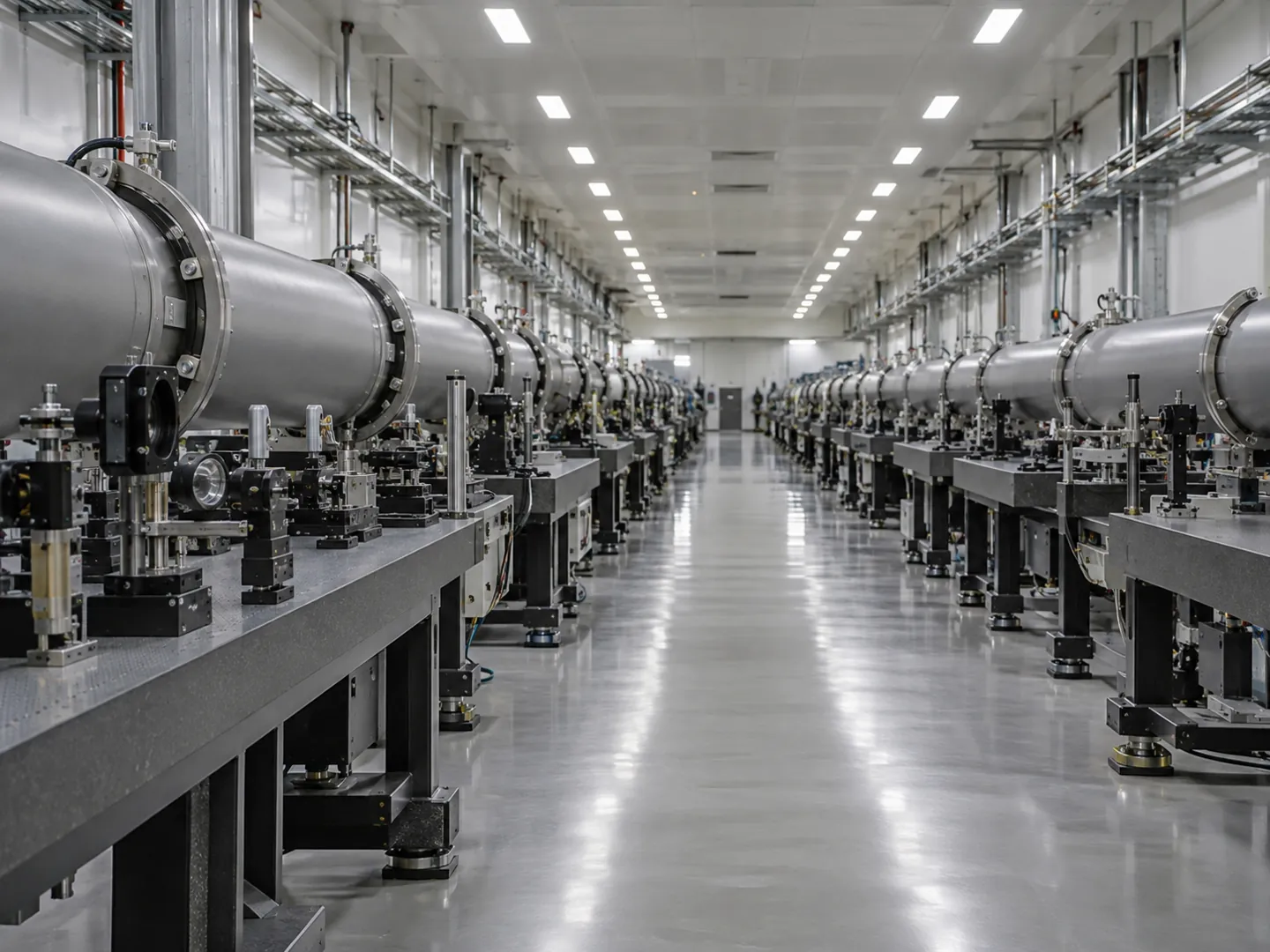
INSIDE A TOKAMAK, STEP BY STEP
ITER describes how a tokamak starts a fusion plasma. It is a careful sequence rather than a single switch.
Air and impurities are pumped out of the doughnut-shaped vacuum chamber.
The magnet systems that will confine and control the plasma are powered up, and a little hydrogen fuel gas goes in.
A powerful electrical current through the gas strips electrons from the nuclei, turning it into a hot, charged plasma.
Extra heating brings the plasma to between 150 and 300 million °C, where nuclei collide hard enough to fuse.
TWO NUMBERS WORTH KNOWING
One figure on how hot a lab plasma must be,
one on what Europe's biggest tokamak achieved.
150 million °C
Plasma temperature for D-T fusion in the lab
Without the Sun's crushing gravity, ITER says lab fusion needs temperatures of 150 million °C, ten times hotter than the core of the Sun.
TEMPERATURE · ITER
69 MJ
Fusion energy from JET's final experiments
The Joint European Torus in Oxfordshire set the world record in its final deuterium-tritium experiments before it ended operations in December 2023.
ENERGY RECORD · UKAEA
Records are not power stations. ITER says it will test reactor-scale technology but will not be equipped to produce electricity, and LLNL says many advances are still needed before laser fusion could power homes.
A QUICK FUEL CHECK
Pick a way of releasing energy to compare it, kilogram for kilogram. The bar gives a rough sense of scale; the real gaps are enormous.
Based on ITER's comparison of fusion with chemical and fission reactions at equal mass, and UKAEA's report of JET's final experiments.
THE LASER ROUTE
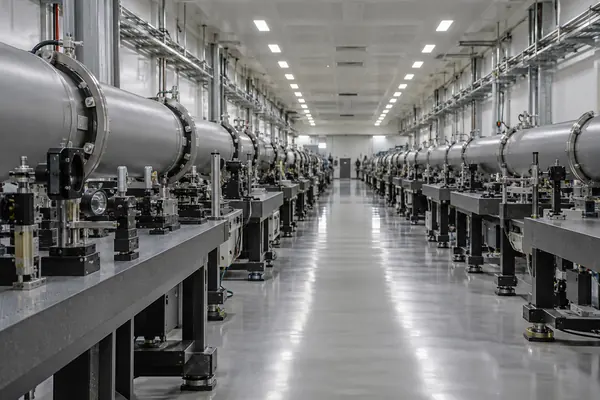
The National Ignition Facility fires lasers at a small fuel capsule instead of holding a plasma with magnets. LLNL defines ignition as producing more fusion energy than the laser energy delivered to the target, first reached on 5 December 2022.
LLNL reports it has repeated ignition several times since, with a record in April 2025 of 8.6 MJ from 2.08 MJ of laser energy on target. LLNL measures this as target gain: fusion energy out compared with the laser energy on the target, which was 4.13 for that shot.
In conversation
It is when light atomic nuclei, such as forms of hydrogen, collide and join into a heavier one such as helium. ITER explains that a little mass is lost and turned into a great deal of energy.
Fission splits heavy atoms such as uranium; fusion joins light ones. ITER says fusion releases about four times as much energy as fission for the same mass, and uses no fissile materials.
Nuclei repel each other. The Sun's gravity and 15 million °C core make them fuse; on Earth, without that gravity, ITER says deuterium-tritium fusion needs around 150 million °C.
ITER says fusion reactors produce no high activity, long-lived waste, and that activated components are expected to be recyclable or reusable within 100 years, depending on the materials.
Not from the experiments on this page. JET and NIF set energy records, but ITER says it will not produce electricity, and LLNL says many advances are still needed for laser fusion power.
Each figure on this page comes from the sources below.
ABOUT THIS NAME
doodlefusion.com is part of the DoodleSale portfolio. It isn't in an auction right now, but you can ask about leasing it.